
A good watch should last for years, but how you store it can make a significant difference to its condition, appearance and performance.
Whether you own a Seiko automatic watch, Casio, G-Shock, Fossil, Curren or Naviforce, proper watch storage helps protect the case, crystal, strap and movement from unnecessary damage.
If you have invested in an original watch, taking a few simple precautions when you are not wearing it can help keep it looking its best.
Why Proper Watch Storage Matters
Leaving a watch loose on a bedside table, inside a drawer or in a bag exposes it to dust, moisture, scratches and accidental impacts.
Storage becomes even more important when you own several watches.
A stainless-steel watch can scratch another watch when they are stored together, while leather straps can deteriorate if exposed to excessive humidity. Automatic watches also have mechanical movements that benefit from sensible storage.
The good news is that you do not need an expensive watch box to store your watches properly.
1. Keep Your Watch Somewhere Dry
Moisture is one of the biggest things to avoid when storing a watch.
Although many watches have some level of water resistance, this does not mean they should be stored in damp environments.
Avoid leaving your watch:
- In a bathroom
- Near a sink
- In direct contact with water
- In areas with excessive humidity
- Inside a damp bag or drawer
A cool, dry location away from sudden temperature changes is generally a better choice.
This is particularly important for watches with leather straps because prolonged exposure to moisture can cause leather to deteriorate, develop an unpleasant smell or become discoloured.
2. Keep Watches Away From Direct Sunlight
Direct sunlight can cause unnecessary heat exposure and may contribute to fading or deterioration of certain materials.
If you are storing a watch for an extended period, keep it somewhere away from direct sunlight.
A watch drawer, dedicated watch box or cupboard can provide a better environment.
This is especially useful if you own watches with coloured dials, special finishes or leather straps.
3. Store Each Watch Separately
One of the simplest ways to prevent scratches is to avoid allowing watches to rub against each other.
If you own several watches, do not simply place them together in a drawer.
Instead, use:
- Individual watch compartments
- Soft watch pouches
- A watch roll
- A watch box with padded sections
This is particularly important for polished stainless-steel watches.
For example, storing a polished Seiko automatic watch directly against another metal watch could eventually result in scratches or marks on the bracelet or case.
4. Use a Watch Box or Watch Roll
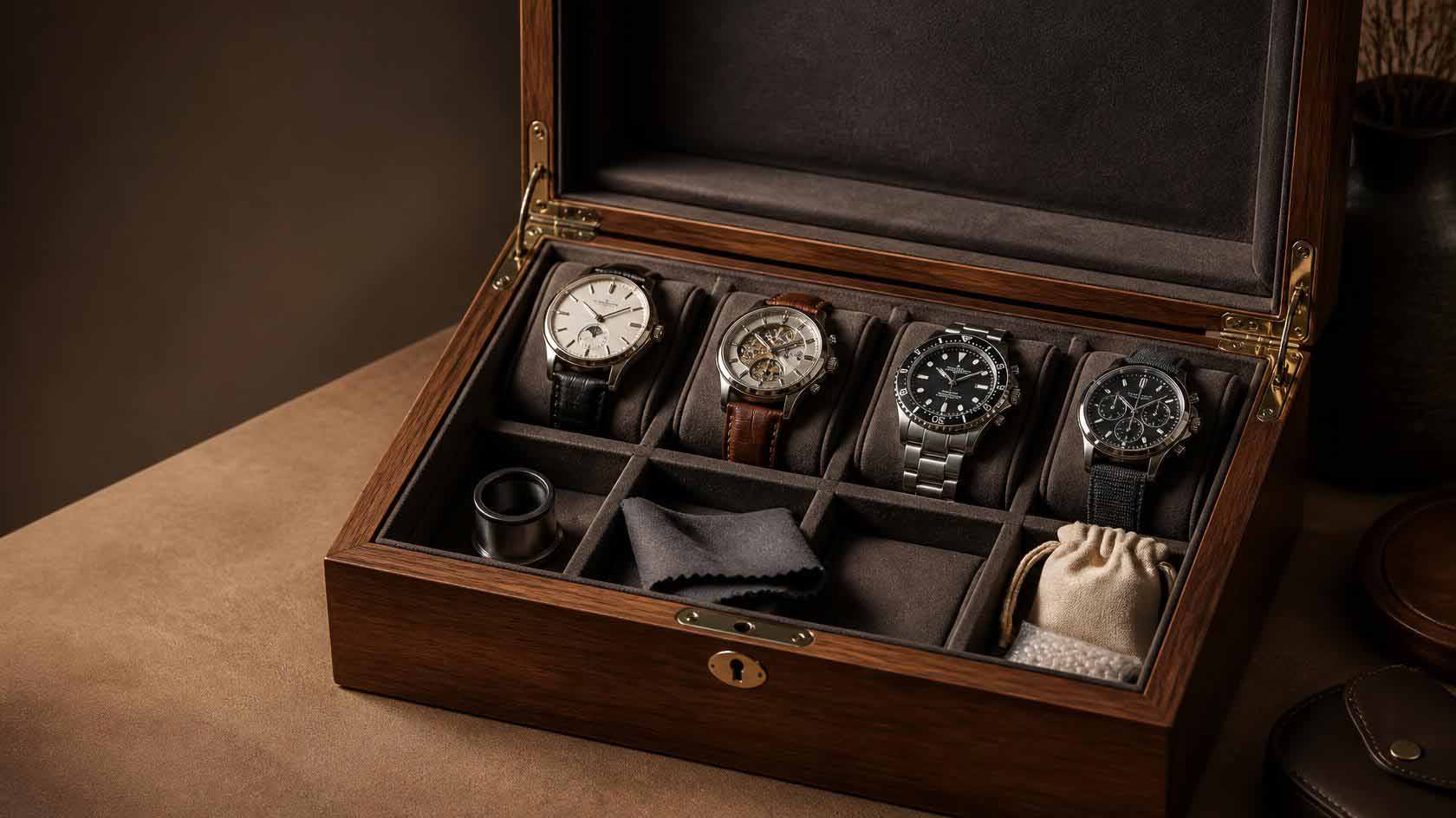
A dedicated watch box is one of the easiest storage solutions for someone with multiple watches.
Watch boxes usually contain individual padded compartments that prevent watches from contacting one another.
A watch roll is another useful option, especially if you travel frequently.
For a small collection of two or three watches, individual soft pouches can work just as well.
The important thing is not necessarily the price of the storage solution but whether it keeps the watches protected, separated and reasonably clean.
5. How to Store Automatic Watches
Automatic watches require slightly more consideration because they contain mechanical movements.
If you own a Seiko 5 Sports, Seiko GMT or another automatic watch, you may notice that it stops running after being left unworn for a period of time.
This is normal.
An automatic movement is powered by the movement of the wearer, so when the watch is not being worn, its stored power will eventually run down.
You do not necessarily need a watch winder simply because your automatic watch has stopped.
For most owners, storing the watch safely and restarting it when they intend to wear it is perfectly practical.
If you own multiple automatic watches and want them continuously running, a quality watch winder can be considered, but it is not an essential storage accessory for every watch owner.
6. How to Store Quartz Watches
Quartz watches are generally easier to store.
If you are not wearing a quartz watch, simply keep it clean, dry and protected from scratches.
However, if a quartz watch will be stored for a very long period, battery condition becomes something to consider.
A depleted battery can eventually leak and potentially damage the movement.
If you plan to store a quartz watch for an extended period, consult the manufacturer or a qualified watch technician about whether the battery should be removed.
7. Store Leather-Strap Watches Carefully
Leather requires more care than stainless steel or resin.
Avoid storing leather-strapped watches in humid environments and allow the strap to dry naturally if it becomes damp.
Do not seal a damp leather watch inside an airtight container.
Instead, allow it to dry completely before storage.
If you own a Fossil watch with a leather strap, for example, giving the strap sufficient airflow when the watch is not being worn can help maintain its condition.
8. Resin and G-Shock Watches
Resin-strapped watches such as many G-Shock models are designed for durability, but that does not mean they should be stored carelessly.
Before putting a G-Shock away, wipe away dirt, sweat and moisture.
A soft, slightly damp cloth can be useful for routine cleaning, followed by drying with a clean cloth.
Avoid exposing the watch unnecessarily to chemicals, solvents or extreme heat.
If you own a G-Shock such as the GA-2100LXB-1A, GA-2300-8A or DW-5600 series, keeping the watch clean after heavy use is a simple way to maintain its appearance.
Explore G-Shock watches in Kenya at Elite Tech Base
9. Clean Your Watch Before Storing It
Before storing a watch for an extended period, give it a quick clean.
For everyday dirt, a soft microfiber cloth is usually sufficient for the exterior.
For watches with metal bracelets, dirt can accumulate between bracelet links, around the clasp and underneath the case.
Do not assume that because a watch is water-resistant it is safe to use soap, water or cleaning chemicals on it without checking the manufacturer’s instructions.
Different watches have different water-resistance specifications.
10. Avoid Extreme Temperatures
Extreme heat and cold can affect watches and their components.
Avoid storing watches:
- Inside a vehicle
- Near heaters
- Near cooking appliances
- In direct sunlight
- In places exposed to extreme temperature changes
A normal indoor environment is generally a better storage location.
11. Keep Your Watch Away From Strong Magnets
Mechanical watches can be affected by strong magnetic fields.
Do not deliberately store a mechanical watch directly next to powerful magnetic objects or equipment.
This is another reason why a dedicated watch drawer or watch box is preferable to simply throwing your watch into a drawer containing electronics and other objects.
If you notice that an automatic watch has suddenly started gaining or losing significant amounts of time, magnetisation is one possible cause, although a watch technician should diagnose the actual problem.
12. Keep Your Watch Documentation
When you purchase a watch, don’t throw away the box, warranty information, model number or other documentation.
Keeping these items together can be useful for:
- Warranty claims
- Servicing
- Identifying the exact model
- Checking specifications
- Future resale
- Insurance records
For more expensive watches, keeping the original packaging and documentation can be particularly worthwhile.
How Should You Store Watches in Kenya?
Kenya’s climate varies considerably by region, but humidity and heat are important considerations when storing watches.
For customers in Nairobi, keeping watches indoors in a dry location away from direct sunlight is a sensible approach.
If you live in a particularly humid area, pay extra attention to leather straps and moisture exposure.
The objective is simple: keep your watches dry, clean, separated and away from unnecessary heat and sunlight.
Do You Need an Expensive Watch Box?
No.
A high-end watch box can be attractive, but it is not necessary to protect an everyday watch.
A soft watch pouch or simple padded storage compartment can be enough for an individual watch.
If you own several watches, however, a dedicated watch box becomes more useful because it keeps each watch separated and organized.
How Often Should You Clean a Watch?
There is no universal schedule because it depends on how frequently you wear the watch and the environment in which you use it.
A watch worn every day may benefit from regular wiping, particularly after exercise or heavy sweating.
A watch worn occasionally may require much less cleaning.
The key is to remove dirt, sweat and moisture rather than allowing them to accumulate over long periods.
Where to Buy Original Watches in Kenya
If you are looking for a new watch to add to your collection, Elite Tech Base offers a wide range of original watches in Kenya, including Seiko, Casio, G-Shock, Fossil, Curren and Naviforce.
You can browse watches for men, women, sports, casual wear, business outfits and gifting.
Shop original watches in Kenya at Elite Tech Base
Final Thoughts
Proper watch storage does not have to be complicated.
Keep your watch dry, protect it from scratches, avoid unnecessary heat and sunlight, clean it appropriately and store it separately from other watches.
For automatic watches, remember that stopping after several hours or days of inactivity is normal. For quartz watches, pay attention to battery condition when storing them for long periods.
Whether you own one everyday Casio or a growing collection of Seiko, G-Shock, Fossil, Curren and Naviforce watches, good storage habits can help keep your watches looking better and performing reliably for longer.
A watch may be built to last, but how you treat it still matters.